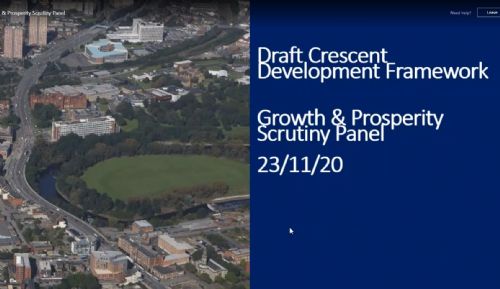
Now that the dreaded English Cities Fund, or ECf, has been chosen as the development partner by Salford City Council for the Crescent, a huge Draft Development Framework for the area is currently out for community consultation, and last night councillors on the Growth and Prosperity Scrutiny Panel got to grill the Council and ECf about the plans.
The ECf is the partnership between Muse Developments, Legal and General and Homes England, that has controversially redeveloped New Bailey and much of Chapel Street.
The ECf has come under fire, particularly from this publication, for a complete lack of transparency in its dealings with Salford so far. For a start the venture hasn't built any affordable houses. Indeed house prices at Carpino Place, Timekeeper Square, Atelier Homes and Valette Square cost upwards of almost £300,000.
Secondly, all Section 106 payments have been waived for its developments in favour of a 'Development Trust Account', which basically takes money from profit-making sites to 'cross subsidise' what it calls 'non-viable' sites. In other words, to boost the profits. After the cross subsidisation, the Council has stated, the fund pays for public realm and, lastly, affordable housing. So far not a penny has been put towards affordable housing that anyone can find.*
The ECf, before it got the Crescent contract, was one of 14 companies with vested interests that paid for the Salford City Mayor's trip to MIPIM in the South of France where the Crescent redevelopment was announced.*
Last night, councillors could have asked about all this. But didn't, praising the presentation's 'detail' (Councillor Rob Sharpe) [there hardly is any proper detail], and getting "excited" (Councillor Mike Pevitt) about its prospects.
Basically the Crescent Framework is a £2.5billion, 240-acre regeneration programme, to be delivered over the next twenty years. It's full of the usual jargon about creating a "vibrant, modern and connected new city district that drives culture, innovation and activity", and, of course, "maximising social value" – although this doesn't seem to stretch to Mo's Shalimar convenience store which has served the community for over 35 years and from which the Council is trying to ruthlessly evict him.
Neither does it stretch to affordable housing, with very, very little detail on numbers or percentages within the plans. Indeed, the 97 page Framework doesn't mention 'affordable housing' once. All it states is: "A broad range of house types, sizes and tenures will be provided in order to create a vibrant new community that meets the needs of a large cross section of society" etc...
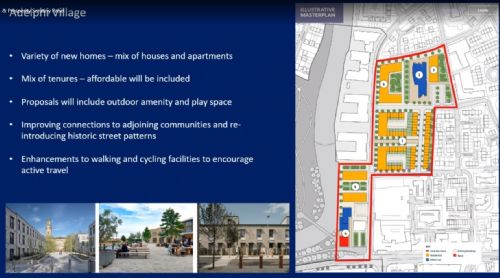
Last night, councillors had the chance to ask about affordable housing. But didn't. They only talked of the mix of houses and apartments, while it was conceded that there might be "some" affordable housing within the Adelphi Village Zone.
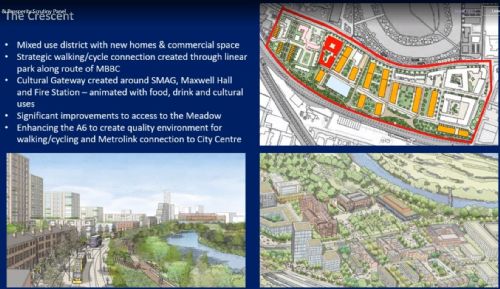
There are six zones – the Innovation Zone (which centres on business and academia); the Parks and River Zone (which centres on the Meadows and Peel Park, with bridges "a priority"); Peel Park Campus Zone (centred on students and the University); the Transport Hub Zone (a new tram and train station etc); Adelphi Village Zone ("some affordable housing"); and The Crescent Zone – a mixed use district that will have a "cultural heart", a new park along the route of the Bolton Bury Canal and a hotel where the old Police HQ building is now.
The Framework itself states that the A6, or the Crescent, will be 'de-engineered', with the Council's Development Manager, Daniel Welsh, explaining to councillors that "There is a vision to get rid of cars from the Crescent...to turn the Crescent into a sustainable transport route for the Metro, buses, walking and cycling...and maybe allow us to reduce the width of the Crescent and to demolish some of the structures to allow the river to open up..."
Councillor Robin Garrido responded "Get rid of the traffic? That's very laudable but people are still going to be using cars...Where are the cars going to go that are still going to be used. Are we still going to have bottlenecks around the city?".
For the Council, Kurt Partington, Head of Development, answered that it was to ensure "We've got a high quality, high class transport hub that we build upon, rather than retaining four lane carriageways through the heart of our city".
Councillor Garrido also asked about the safeguarding and promotion of heritage assets within the plans, to which Partington replied that they "would seek to retain historical assets and promote them and build upon them", and gave the example of the Bolton Bury Canal which will have 'boards' to explain its significance.
No-one asked about the fate of the Crescent pub, nor the Old Pint Pot pub, nor any other buildings along the A6 – the Black Horse and Ye Olde Nelson have already been demolished to make way for ECf development.
Kurt Partington concluded that the Framework was "aspirational" a 'vision and ambition' "that our city deserves"... For the ECf, Phil Marsden said that, once adopted, development would be in five years chunks, starting in the New Year.
The community consultation on the Draft Crescent Development Framework runs until 1st December.
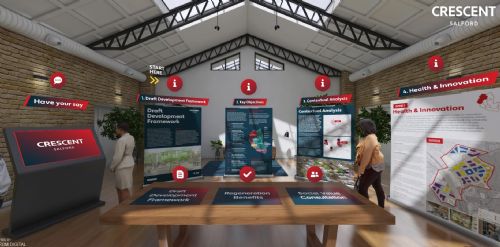
There is a virtual consultation room with some slight details of the plans – click here
There are more details in the Development Framework itself – click here
There is also a consultation on a Social Value Strategy for the area – click here
* For a full background see previous Salford Star articles...
English Cities Fund Wins Salford Star Feed The Rich Award – click here
Companies With Vested Interests In Salford Development Funded City Mayor Trip to South of France – click here
Salford City Council Agrees £7.6million Subsidy For Luxury Homes On Chapel Street – click here




.jpg)


.jpg)
.jpg)
(3).jpeg)
.png)
(1).JPG)
