CHRISTMAS BOOKS TO MAKE YOU THINK
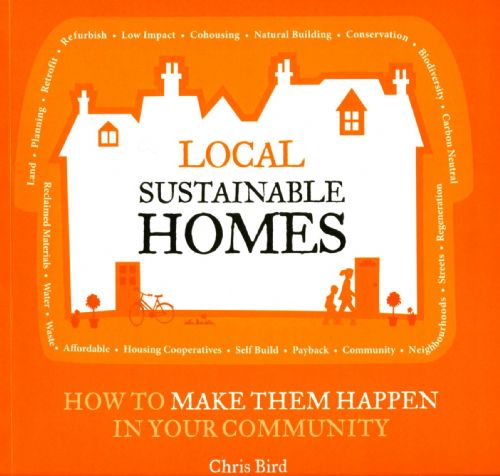
Book 1: LOCAL SUSTAINABLE HOMES: How To Make Them Happen In Your Community by Chris Bird (Transition Books £14.95)
Don't be put off by the title. This is one ace book that pulls together years of research and philosophy on the future of housing. And it's the first book that we've seen which actually completely trashes Government and local council thinking on community housing.
Take this quote by William Perin, Secretary of SAVE Brian's Heritage on Chimney Pot Park and many other Pathfinder projects. The problem with them, he says, "is that part of the stated aim is to get rid of the community…to rejuvenate the area by bringing in `more economically active people'".
There's five pages on the Urban Splash `upside down' houses at Chimney Pot Park, much of it taken from the Salford Star expose, and it's used as an example where "saving homes from demolition doesn't always save the community".
Chris Bird looks at the unaffordability of the Splash homes, the secrecy surrounding the financial dealings between Salford City Council and Urban Splash, and questions Urban Splash's reputation as a valid regeneration development partner.
Apart from getting the number of houses remodelled by Urban Splash wrong (349 houses, not 2000!), Bird sums up the scheme perfectly as "displaced residents priced out of their own community".
The book gives loads of alternatives to the current `demolish everything in sight and build new houses' philosophy. And, apart from the shocking example of Chimney Pot Park, argues the case for refurbishment rather than demolition…
"It's often assumed that replacing old homes with new eco-homes is the way to save energy" Bird writes "This view is encouraged by the media, which sees new build as `sexy' and newsworthy; and by developers who profit more from demolition and new build than from refurbishment …but research by the Empty Homes Agency suggests otherwise."
The research states that the average new build resulted in 50 tonnes of CO2 emissions, compared with 15 tonnes for refurbished homes: that, although new homes are slightly more energy efficient, the difference is tiny and would take "usually more than 50 years for the new homes to make up for their higher embodied energy costs."
Bird quotes the government's Planning Policy Statement 3 that "Conversions of existing housing can provide an important source of new housing. Local Planning Authorities should develop positive policies to identify and bring into residential use empty homes and buildings".
And all this is just one tiny chapter (10) of the whole book which looks at alternative ways to make housing work for communities – be they made of straw, hemp or mud. This book is generally a tour of Britain where social housing is working – both for the community and for keeping energy costs down, with the by product of saving the planet.
And it's crucial because, as Bird says, "as we reach peak oil, it becomes increasingly difficult to continue building and using our houses in the same old way. Look around your home. What can you find that doesn't depend on cheap oil or other fossil fuels…
"In a typical winter, around 25,000 people die in the UK because they can't afford to keep warm in their own homes" he adds "As many as 4.4 million British homes fail to provide adequate thermal comfort – and this figure is rising as fuel prices increase."
Chris Bird tries to give some answers. He makes you think.
LOCAL SUSTAINABLE HOMES: How To Make Them Happen In Your Community by Chris Bird (Transition Books £14.95)
Buy it at www.greenbooks.co.uk or click here




.jpg)


.jpg)
.jpg)
(3).jpeg)
.png)
(1).JPG)
