Street Loss.
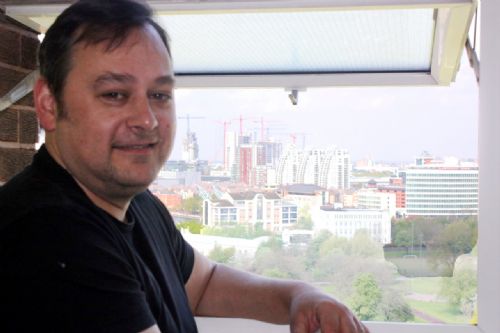
A personal view by Nigel Pivaro
Since the 1930s Salford has become a by word as an image of gritty terraced back streets the world over. The image has been disseminated and reinforced all over the world by films such as Love on the Dole, Taste of Honey, Hobson's Choice, The White Bus, Charlie Bubbles, East is East and of course Coronation Street.
The terrace street is, along with the industrial workplace, what has defined most of us to ourselves and the rest of the world. Let's face it, if we were not in one we were in the other. Of course I am well aware, as the council pink poster propaganda told us, Salford has many green woods and open spaces. So it does but most Salfordians do not live in them or near them.
Certainly not the residents of the old city for at least the past 150 years or so. Walkden, Swinton, Clifton and Eccles towns that were added to the City after the 1974 boundary changes also had dense concentrations of terraces of their own. But since the Second World War thousands of the streets that gave the city that singular identity have been lost.
The War started the process, taking out blocks of powdery clay red brick houses, especially around the docks in Ordsall as the Luftwaffe pounded Salford and Trafford Park in the blitz of 1941. More streets started to come down in the late fifties and mid sixties slum clearance but it was the seventies and eighties that really put paid to their existence.
Whole neighbourhoods, set out in grid iron fashion with smoky Victorian back to back terraces separated by narrow entries choc full of battered metal dustbins, fell victim to the bulldozer. The entries were full of dog dirt and black gold, the droppings of the coal merchants delivering nutty slack to the coal holes in tiny back yards. The same yards also accommodated the lavatory, as the toilet was then known.
The entries had a life of their own. If for whatever reason you were avoiding someone or didn't want to be seen then the warren of entries were your preferred method of travel. Many an illegal bookies was run from the back yard and perhaps many Salfordians were conceived in them too.
With the demise of the traditional street, the corner shop and small local pub (sometimes just a counter and a parlour with a small stone flagged annexe for the ill shod), of which there were hundreds bookending most streets also disappeared into the demolition dust.
In short, a whole way of life ceased to exist and the way Salfordians interacted with their neighbours and the world around them changed dramatically.
For years we have looked at this monumental change to our living styles in economic and social terms but what have we lost culturally? The pub team, the church or scout youth club, the lads clubs that kept kids occupied and focused for generations, the street parties and charabancs that sustained neighbourhood morale. People would be astounded to know that in a poor area such as Ordsall there were not only at least 150 pubs (I can still name around half of them) but a rich assortment of shops, theatres, cinemas and services within easy reach of each other.
These places were the glue that not only kept the community together but made a neighbourhood what it was, gave it an identity. Forty years on it is about to time to reflect on what we have lost and its impact - and how, if ever, we can put it back together.
"If it in't broke don't try t'fix it" my uncle Bill used to say, and he knew what he was talking about having worked as an engineer in Trafford Park for fifty years. That's exactly what Salford Council did in the forty years after the war and it was not just a case of new for old; in some cases old institutions, shops, services, churches, pubs were simply never properly replaced.
Inevitable slum clearance also meant that along with substandard housing went many magnificent buildings that served the community. Along with the slums went churches, banks, department stores, opticians, grocers, pubs, social and work clubs, doctors surgeries, public baths and libraries - including the one on Regent Road where Walter Greenwood penned Love on the Dole.
I argue that what has replaced the old order is not only bland and characterless but actually has never been put back at all. Thanks to generations of Council planning and housing apparatchiks Salford has lost its unique identity as a city, and with it maybe even its soul.
Can we actually say that the city that spawned the greatest polemic on the relationship between Labour and Capital at the start of the Industrial Revolution still has an energy of its own? Can we point to anything architecturally that distinguishes the general appearance of Salford from a hundred other towns and cities up and down 21st century UK?
Sure there are individual buildings, but could you take a random snapshot of any neighbourhood in the city that says, this is uniquely Salford? I challenge anybody to produce an image that marks the city out distinctly, as is possible with Barcelona, New York, Venice or even Glasgow with its remaining sandstone tenements; I would say it cannot be done.
Looking back on my own personal contribution in highlighting the abject chaos of the `Langworthy Regeneration' in the national media I have to admit I now realise that the destruction of our identity as a city was part of what motivated me. Yes of course there was the injustice of the lob sided financial deals that was doled out to residents, homeowners and businesses. There was the incompetence involving the waste of public money and there was my outright anger that amidst all that, profit making companies were able to steer and exploit the whole enterprise at the expense of probably Salford's last remaining traditional working class community.
But underlying that was a sentimental attachment to the bricks and mortar, the street lay out, the closeness, smells good and bad and the lifestyle it engendered. More important than my personal attachment, is the knowledge of what place meant to people who in many cases chose to hold out surrounded by vermin infested bricked up property rather than take the Council's pittance to move on.
Staying with Langworthy, 15 years on from when the process began can the Council say that there is a community that now exists as it did when the area was thriving before the demolition started?
Pubs and shops and business services are non existent. Gone is the launderette on Liverpool Street, as is the insurance office, the carpet shop, the back street chippies and grocers, the Langworthy Arms, not to mention half a dozen other pubs.
People remaining in Langworthy are now isolated in residential pockets; they have to cross wasteland to get from one part of the area to the other, or worse get in their cars if they own one and travel outside.
When those responsible for the regeneration programme next take a look at
Langworthy, stop a while and think...think of the all the pub football and darts teams, the church groups, the close and loose network of human relationships that were formed over many years. All now disrupted. Think of this and think of another England that with your connivance we have lost forever.
In a year when Coronation Street, Britain's most watched and most successful
television programme, celebrates its 50th anniversary it is ironic that the city which provided the local born author Tony Warren with his inspiration no longer possesses the raw material that established city's image in the nation's consciousness.
Photo of Nigel Pivaro by Suzi Hoffman


.JPG)


.jpg)


.jpg)
.jpg)
(3).jpeg)
.png)
(1).JPG)
