Coming out from three months of imposed lone isolation was not easy. I felt nervous of the freedom and perhaps bumping into other human beings, equally nervous. Although I had waited eagerly for this release I, nevertheless, hesitated and found excuses before I stepped from my home safety and wondered where to go.
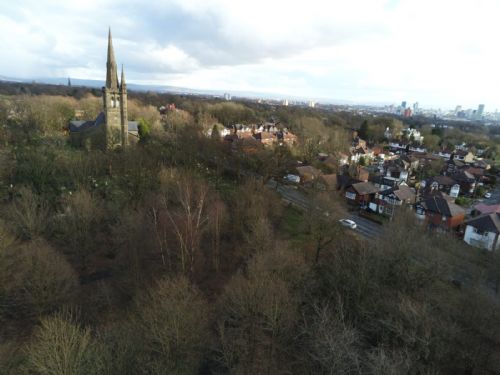
Shops were too scary because of other customers, so I decided on a familiar patch of land, frequented by me many a time in pre virus days. This was Kersal Moor, eight hectares of wilderness, a designated nature reserve by English Nature, on the boundary of Salford and Bury.
Kersal Moor has provided shelter and safety for many throughout its history and even recently has been a popular place for walkers during the COVID months. Once discovered and enjoyed, its peace may have soothed many a stressed mind. It seemed the perfect place for me to wonder and to reminisce...
So I have decided to Tell a Tale of the Moor as I take my regular walks in my 'reawakening'. These tales will answer a question or two anyone may have about this unique place.
Many folk ask why it's called 'a Moor,' when it is a surrounded by a dense ring of trees and bushes. Once upon a time the Moor really was a moor, bordering the River Irwell and characterised by a sandy soil left from the action of the Ice Age. The great sheets of ice rolled the rocks over the ground grinding them into fine pieces and sand.
As you walk the Moor you may be surprised to see great patches of sand, once called 'the Beach' by children. Mosses, acid grasses and heather grow happily on this shallow sandy covering. Its uniqueness has led to it being registered as a Site of Biological Importance.
During Victorian times, local builders dug out the sand for their trades, eventually reducing the height of the highest point, called Sandy Hill. In 1973 a national programme Plant a tree for '73 was applied to the Moor, and the current ring of trees was planted by Salford Council.
St Pauls Primary School was then on the Moor, first being built in 1861, and I imagine many children enjoyed planting trees. The Moor has a very varied mix of trees, including fruit trees. So now you know why the Moor isn't a Moor but a wood.
Of latter years, these have been encouraged for the clean air benefits but the centre of the Moor is maintained as an open space. There are still older locals who remember the open spaces when it was a sandy moor. Recently the trees have been thinned to allow light to the ground, in the hope that woodland flowers may grow.
You may notice how the removed branches have been stacked into 'dead hedges' as shelters for small creatures. Also removed tree branches lend themselves happily to the building of den houses. Strangely I have never seen children building the dens. I wonder if they are built by the happy ghosts of children who may still roam these dells at night? There are many reasons for ghosts on the Moor. Next time I will tell a story of another ghost of the Moor...
To read the series Alice in Salford Isolationland – click here and follow the links
Alice Searle is the author of two books: A Celebration of Kersal Moor and More Moor Tales
Aerial photo by Gareth Lyons




.jpg)


.jpg)


.jpg)
.jpg)
(3).jpeg)
.png)
(1).JPG)
