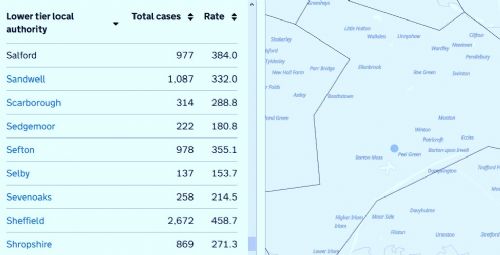
Salford has recorded no new confirmed cases of coronavirus for the fourth consecutive day as the total stays at 977. The levelling out of cases also seems to be apparent throughout Greater Manchester, with just 17 new cases in the region.
Confirmed virus cases in Manchester now total 1,728 (up from 1,727), followed by Wigan with 1,234 (up from 1,232), Oldham 1,156 (up from 1,152), Stockport 1,090 (up from 1,089), Bolton 1,058 (same), Trafford 884 (up from 883), Rochdale 883 (up from 881), Tameside 870 (up from 866) and Bury 817 (up from 815).
Salford Royal Hospital has announced one new sad virus-related death.
Meanwhile, new figures from the Office of National Statistics, or ONS, show COVID-19 deaths by occupation, covering 4,761 deaths registered between 9th March and 25th May among those aged 20 to 64 in England and Wales.
The analysis shows men working in 'elementary' jobs such as security, construction and cleaning having the highest death rates compared to people of the same sex and age.
Men working in those jobs had a rate of 39.7 deaths per 100,000 (421 deaths) and the occupation within this group with the highest death rates was security guards, with 74.0 deaths per 100,000 (104 deaths).
Also found to have raised death rates were men working as taxi drivers and chauffeurs (65.3 deaths per 100,000; 134 deaths), bus and coach drivers (44.2 deaths per 100,000; 53 deaths), chefs (56.8 deaths per 100,000; 49 deaths) and sales and retail assistants (34.2 deaths per 100,000; 43 deaths).
The most death rates for women were recorded for those working as care workers and home carers (25.9 deaths per 100,000 women; 134 deaths), followed by national government administrative occupations (23.4 deaths per 100,000 women; 22 deaths)and sales and retail assistants (15.7 deaths per 100,000 women; 64 deaths).
Responding to the raised rates of death involving coronavirus among social care workers, Councillor Ian Hudspeth, Chairman of the Local Government Association’s Community Wellbeing Board, said:“These truly shocking statistics are another tragic reminder about the essential need for our vital social care workforce to be fully protected and equipped to look after themselves, as well as all the people of all ages they are supporting, and helping to keep safe and well.
“People working in social care, including care workers, are on the frontline against this deadly disease and continue to put themselves at risk in order to care for those who need their help and support" he added “All those working in social care have to receive everything they need, including reliable and consistent supplies of quality PPE, to protect them and the people they care for from this terrible pandemic.”
On a lighter note, a survey also released by the ONS yesterday showed that 96% of those who reported exercising more since the coronavirus lockdown said they wanted to continue with their positive lifestyle change.
"This may be one of many permanent changes people make to their lives in the wake of the pandemic, as more than a quarter (28%) of adults said they were planning to make big changes in their lives" the ONS added "Of these, 42% want to make a change to their work and 38% want to change their relationships.
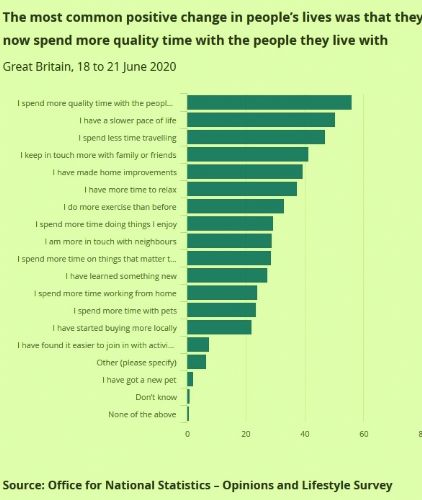
Almost half of adults (43%) also reported that some aspects of their lifestyle had changed for the better since the pandemic, in the period 18th to 21st June 2020.
"The restrictions of lockdown appear to have brought households closer together, as more than half (56%) of those who reported positive changes said that they were now able to spend more quality time with people they lived with" states the ONS.




.jpg)


.jpg)
.jpg)
(3).jpeg)
.png)
(1).JPG)
