Yet again, Salford's lack of affordable housing is in the spotlight, this time at today's meeting of the Greater Manchester Planning and Housing Commission, chaired by none other than Salford City Mayor Paul Dennett...
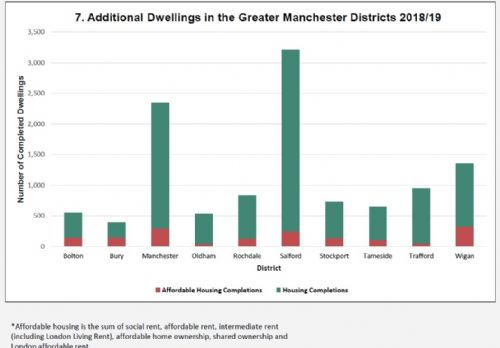
Graphs and statistics provided in a report on the Housing Market Monitor show that Salford has the second lowest percentage of affordable housing completions in Greater Manchester with just 7.6% - and, as well as social rent, this includes housing that is not 'affordable' such as 'affordable rent' properties which are 80% of market rate, shared ownerships, 'affordable' home ownership etc.
The figures show that Salford had 244 of these 'affordable housing completions' out of 3,208 properties, while Wigan, for instance, built 325 'affordable' properties from a total of 1,350 properties completed, or 24.1%...Bolton (27%) and Bury (36.5%) had the highest percentage completions of affordable housing albeit on much smaller numbers.
Meanwhile, Manchester, much maligned for its lack of affordable houses, managed to complete 1,619 affordable properties out of 11,525; not brilliant, but almost double the percentage of Salford at 14%. Over the whole of England, there were 17.2% of affordable housing completions.
According to the GMCA report, the average house price in Salford, as of October 2019, was £166,073, a rise of 4.6%. The highest house price rise was in Bury at 6.6% and an average house price of £178,765. Median house prices in Worsley ranged between £300,000 and £450,000, comparable with richer areas in Stockport, Manchester and Trafford.
Between April 2018 and March 2019, the figures show that the highest private rent, or upper quartile, in Salford hit £850 per month, while the mean, or average, rent was around £750 per month. The lower quartile rent for the city was around £625 per month.
Private rents in Salford have risen by over 25% between 2011 and 2019, from around £550 per month to around £750 per month over the period.
Salford also has the highest housing waiting list in Greater Manchester from the latest figures 2017-18 (due to be updated this month) with 5,818 people – and this is after the Council had changed its allocation policy, kicking thousands of people off the list.
The report tells a story of two Salfords emerging – one for the well monied, and one for those left behind...


.jpg)
.jpg)


.jpg)


.jpg)
.jpg)
(3).jpeg)
.png)
(1).JPG)
