Next week, Salford City Council is set to approve tenders to begin work on the Salford Bolton Network Improvements (SBNI) Package 3, with the full £39.6million scheme starting with a £2.5million contract, plus the £19.8million Trafford Road Corridor Project.
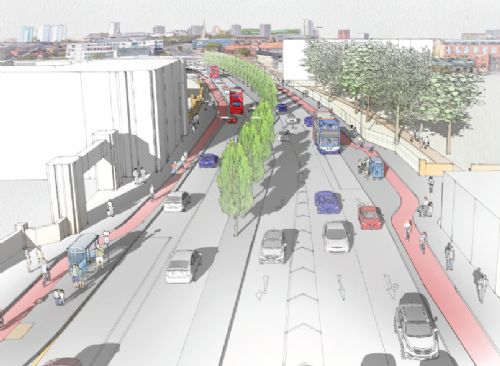
Trafford Road runs from the M602 to the bridge over the Manchester Ship Canal and into Trafford, and the scheme will create new layouts at key junctions along the way, as well as, the Council states, "enhancing facilities for pedestrians and cyclists movements both along and across Trafford Road".
The Council states that the "project is designed to support the continued growth of the Quays and MCUK [MediaCityUK]", as it reckons there will be another 18,500 jobs created there and the population will swell to 34,000 by 2040. Its independent study concluded that "the Trafford Road corridor would become increasingly congested and would therefore hinder the predicted growth for the area..."
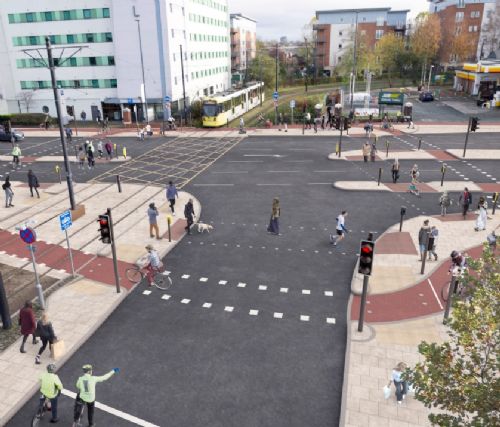
The Council adds that the scheme will "improve capacity for vehicles", "reduce congestion" and will segregate "footway and cycle track facilities along the corridor" by reallocating space from the central reserve, segregating pedestrian and cycle facilities with dedicated crossings, changing the 'street furniture', adding trees and putting in some 'gateway features'.
The Trafford Road scheme will start in January with £1.4million 'enabling works' to divert phone, gas and electricity lines, before the main work starts next summer, taking an estimated 18 months. The whole project is costing £19.8million, made up of £4.835million from the GM Mayor's Challenge Fund, £10.5million of Growth Deal 3 funding and £4.5million of local match funding by Salford City Council.
There's a 'public engagement event' on the Trafford Road scheme today, 21st November, between 10am and 7pm at the Copthorne Hotel for people to see more detailed plans and ask questions.
Next week, the Council will also rubber stamp the appointment of Eurovia Infrastructure Limited to undertake the Salford Bolton Network Improvements, or SBNI, Salford Delivery Package 3 work at a cost of £1,635,231, plus around £800,000 for utility diversions, paid for by the GMCA Growth Fund. The total cost for the whole scheme is £39.6million.
Works will include the controversial inbound A666 Peak Hour Bus Lane running along the A666 from the M60 junction to the Irlams o'th'Height roundabout, which campaigners say is not needed (see previous Salford Star article – click here). The scheme also includes a cycle lane and upgrades to crossing points.
Despite opposition from residents, the Council report on the contract procurement states that the "proposals were further reviewed and after considerations of the objections, further changes were made", and that "all significant issues" have been "addressed".
However Paul Brighouse, who runs the Stop The A666 Bus Lane Madness Facebook group tried to have councillors call in the decision to go ahead with the scheme, arguing that "The very premise of the bus lane is based upon weak evidence and a lack of consultation and discussion within the Council with local people..." (see previous Salford Star article for full details – click here)
Councillors couldn't call in the decision, even if they wanted to, as the cut off date had already passed, unbeknownst to residents.
The project is planned to start on 3rd February 2020 for 36 weeks, and is part of a £39.6million scheme spreading out across Salford and Bolton. Other schemes in this 'Package 3' include huge changes to the A6 Broad Street/Belvedere Road/Frederick Road Junction (see previous Salford Star article for details – click here); reconfiguration of parking bays on Bolton Road between Acresfield Road and King Street, and between Moorfield Road and Doveleys Road; and a new signalised crossing on the A6 near the Salford Crescent Station.
Salford Council states that the works will "significantly improve traffic movements, improve bus punctuality and enhance the safety and connectivity for cyclists and pedestrians..."
Main graphic shows Trafford Road visualisation




.jpg)


.jpg)
.jpg)
(3).jpeg)
.png)
(1).JPG)
