Microplastics do not include the plastic bags and bottles that float on English waterways. They are tiny particles, less than five millimetres long, that can barely be seen by the human eye but have been studied using a fluorescence lighting system, by researchers who were able to identify and count microplastic pollutants per litre of water.
The research, conducted by Bangor University and Friends of the Earth, investigated ten sites around Britain, including rivers, lakes, lochs and a reservoir, and found microplastic pollution present in all of them, ranging from 2.4ppl (plastic per litre of water) in Loch Lomond, Loch Lomond and Trossachs National Park, to an outrageous 1,000ppl in the River Tame, Tameside.
The River Irwell in Salford was the second highest polluted of the tested sites with 84.8ppl, while London's River Thames came next with 84.1ppl.
What does it all mean, is it dangerous and how bad is the River Irwell? Even the researchers don't know, calling for more research and national water monitoring, similar to air quality safeguards.
"As a scientist I don't want to be alarmist and just present the facts and data" says Dr Christian Dunn, of Bangor University, who led the reserach "Do I know if it's dangerous? No I don't, because we don't know...but what I think is alarming is the fact that it's there in litres of water
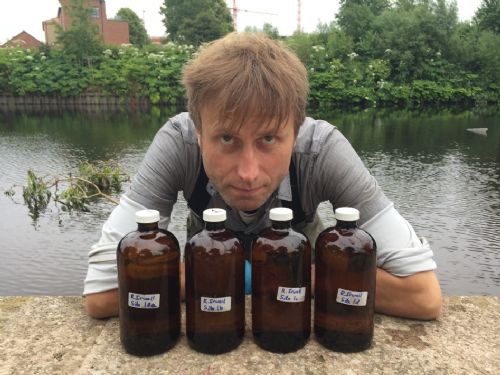
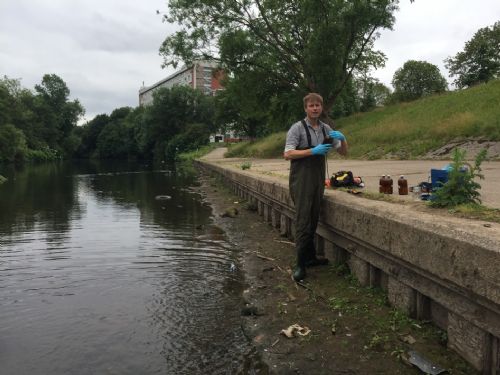
"The sample procedure is that you go out with a bottle and you fill it up with water from the site, and then by chance that bottle has 84 pieces of plastic" he adds "That's quite worrying. Just that plastic floating around the rivers in those concentrations. Is that concentration harmful in terms of being dangerous for the eco system and wildlife, or even our human health? We don't know, we need more information but it's something we need to be aware of and everyone should be thinking about the amount of plastic they're using which could ultimately end up in our inland waters."
Friends of the Earth and Dr Dunn, say the findings suggest that microplastics should now be considered as an emergent contaminant - and that routine monitoring of all UK waters must now take place. Friends of the Earth is also urging MPs to support new legislation, currently before Parliament, to phase out plastic pollution within 25 years – including an end to non-essential single-use plastic by 2025.*
"The widespread contamination of our rivers and lakes with microplastic pollution is a major concern, and people will understandably want to know what impact this could have on their health and environment" says Julian Kirby, plastics campaigner at Friends of the Earth "Plastic pollution is everywhere - it's been found in our rivers, our highest mountains and our deepest oceans.
"MPs must get behind new legislation, currently before Parliament, that would commit the Government to drastically reduce the flow of plastic pollution that's blighting our environment" he adds.
* The Phase-out of Plastic Pollution Bill, which has been drawn up by Friends of the Earth and the National Federation of Women's Institutes (NFWI), was presented to Parliament yesterday by Alistair Carmichael MP, with support from a cross party group of MPs. The Bill would set a statutory long-term target to significantly cut plastic waste and pollution by 2042 in particular by phasing out all but the most essential uses of plastic. The bill also requires plastic waste and pollution to have been substantially and progressively reduced before this date, including a 2025 target to end non-essential single-use plastics. The Bill is due to have its second reading next month. For further details see : https://friendsoftheearth.uk/plastics/new-bill-cut-plastic-pollution-presented-parliament
Main photo shows Julian Kirby with the River Irwell bottles




.jpg)


.jpg)
.jpg)
(3).jpeg)
.png)
(1).JPG)
