'I wince every time I see the bee...'
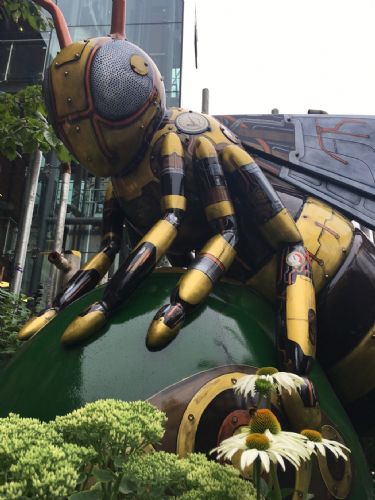
The iconography of bee has dominated every corner of Manchester since the attack in summer 2017. It was a way of showing solidarity and pride as a dignified collective response to those hurt and traumatized by the violence. We were Manchester and proud.
It was spread so rapidly by both the Council, and the people...Rubbish bins, plant pots, and library doors were adorned with it. People had tattoos; t-shirts and mugs were made. There was a collective connection and everyone branded themselves, their businesses and the streets with the image of the worker bee representing the people in Manchester, the hive.
For ages it disconcerted me, there was a depth bound up in the image that wasn't fully revealed. I didn't know what it was; a binding magic, occulted information and hidden darkness. It was suddenly everywhere, particularly on police uniforms...
Anything that the Council or state evangelically use as propaganda I question; there was dark magic in there somewhere. After numerous times tensing my shoulders and frowning at every echo of this bee, I heard someone mention it's the hive; Manchester represents the hive of the worker bees, the heart of the Industrial Revolution, the factory system...and my heart wrenched.
I got it and knew the reason was in the history. As someone said to me recently 'If it's hysterical, it's historical'. I know now why I wince every time I see the bee. It represents the moment over one hundred years ago that Manchester went from cottage industry to cotton industry, from homes to mills, from handmade skills to mass production.
So, for the eighth time that day, and same as every day, I felt sickened again by both the structures and iconography of capitalism. Historically, seven bees were weaved into the crest of the city of arms awarded to Manchester in 1842 as it was recognised as a city; the bees representing the workers and industry.
The Industrial Revolution was not known as the 'industrial revolution' at the time, it was termed unendearingly by everyone as the 'Factory System'. It is in this moment, class, as we now experience it, came to exist. Between 1750 and 1850 there was a final redistribution of land to the gentry, stolen from the people with parliamentary land enclosures.
A third of the population of England were forced to move from the country into city slums, as factories were built for the new cotton industry. People were left with no choice, with the commons being enclosed and taken by the upper classes, but to head into the cities to buy back their food. Of course the arguments to back up both these huge changes in society that serve the elite were in the name of 'civilisation'.
The gentry argued that the land was wasted on the poor, was inefficiently used and "full of shrub and half starved beasts". The stealing of this land was the final shift to industrial agriculture, the monopoly of land, and the destruction of soil via monoculture. Meanwhile in the slums of Manchester the streets were full of offal, mud and faeces.
The Industrial Revolution created the working class and nobody there chose to be a worker bee. The industrial revolution put us at the absolute mercy of our oppressors, as what were land rights, suddenly became workers' rights.
When people lived on the land, fed themselves via the commons and traded with individual skills this was known as cottage industry. The mills replaced this with hundreds or thousands of people working in one mill. The first mill in Manchester was built by Richard Arkwright in 1780, others followed around Ancoats.
Women made up the majority of the workforce, working as weavers, and child labour was characteristic of the time. The working class lived in walking distance of town – Hulme, Ancoats...Salford, and the middle classes moved out to the country, able to afford to use the railways for commuting. Children and young women worked 16 hour days with often only bread and porridge to eat, waking at 5am and walking miles to work and back again. Working in this manner, large families would live in one bedroom houses, still unable to afford to feed themselves, clothe themselves, nor heat their squalid homes.
People unsurprisingly were pretty pissed off about all of this and being forced into the cities. Before the building of mills, Manchester was a market town. In response to the shit conditions people were subjected to for their survival and the further pressure put on jobs by the growth of machinery, came the rising of the Luddites around 1811-1813, with an organised outbreak of factory destruction and machine smashing across Lancashire and Nottingham.
As people became poorer with rising food prices and the creation of the labouring class, people made their feelings known. They demanded back their rights. On March 12th 1812 a crowd of five hundred attempted to set fire to a power loom factory in Stockport. There were disturbances across town with thousands of people involved. Factory workers were demanding a minimum wage* and mill owners who opposed it were targeted. On the 25th May, 27 men from Stockport were tried by the Chester special commission. Two men were hung for robbing houses; there was no further resistance in Stockport.
People were still mad and simply not having it. They began to take back what was theirs. On the 8th April that year, three days of food riots began to claim back the market town that was once Manchester. It was estimated that around 12,000 people restlessly gathered, and riots began at the potato market in Shudehill.
All the meat put out for sale was seized and taken by the crowd. Large stocks of potatoes were taken and what wasn't taken home was used to pelt the market dealers. The remaining foodstuffs were sold cheaply by the market dealers, because of the demands of the women.
Although people had not managed to achieve minimum wage or to burn down the factories, their collective restlessness and rage played a part in lowering food prices and redressing the economic system that was increasingly outpricing them. It wasn't over. A few days later, on the 20th April, back at the potato market, a woman was stopping potato carts and telling the crowd to take the produce. She unscrewed the side so the potatoes tipped out and she fitted as many as she could in her skirts before running away, as many others followed suit.
It happened again with the butter seller, where one woman demanded a much lower price, the butter seller, who was intimidated by the surrounding crowd, accepted, and found hundreds chasing him until all his butter was taken at a much lower rate.
There were riots like this across the whole of the North West, with many people being arrested and imprisoned. Food riots happened in shops and markets across the board and people took as much as they could carry in whatever they could find. I think of a friend who is writing a book about why looting is always political.
Meanwhile on the outskirts of town, in Middleton, the Luddites were taking violent action. Daniel Burton and Sons' mill, which had just installed power looms, was set on fire by two women known as Clem and Nan, apparently daughters of an old weaver. In Westhoughton, a mill was attacked by a crowd of people who were throwing stones and bricks breaking the windows. Two young women actively broke the windows with implements before the mill was set on fire. Two girls known as Lydia (15 years old) and Molyneux (19 years old) were arrested and charged with maliciously and unlawfully setting fire to the mill but were acquitted.
Hannah Smith was tried at Lancaster on the 29th May 1812, accused of stealing potatoes in Manchester. She was 54 years old, married with eight children. She was found guilty and hung in public on the 13th June at Lancaster Castle together with seven men.
During this time the ruling classes were deeply afraid of revolution. The law of habeas corpus, which states that no one can be imprisoned without proof of crime, was suspended. Any public organising/gathering or unions were halted using The Combination Acts of 1799. Organizing was pushed underground and unlawful imprisonment suddenly became lawful. 12,000 troops were sent to suppress the Luddites, and by 1813 they were defeated via infiltration and public executions, with many in prison and burnt out.
People were increasingly aware of their conditions, watching the corpulent and rich gentry live luxurious lives on the backs of their labour. The people were restless for justice. In 1819 the Peterloo Massacre happened, when 100,000 people gathered on St Peter's Field in Manchester for a series of speeches and discussions on parliamentary reform.
The people, pissed off, and conscious of their oppression were ready to reform a societal structure to serve all, not just the ruling class. They were conscious the majority of decisions made in Parliament had no MP's representing the workers of the industrial north, with only MPs from upper class areas. They were gathering to discuss reform that represented themselves. The cavalry charged them and many people died and were injured. The organised speeches never went ahead. It did lead to the repealing of The Combination Act in 1824.
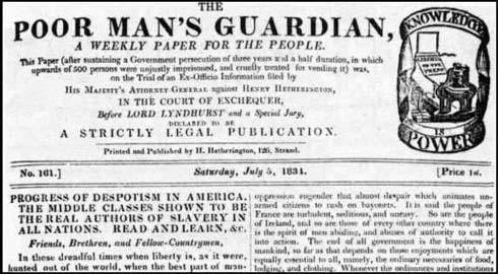
People mobilised through word of mouth until the radical printing press that began in the 1700s. Large public meetings were held in public spaces the minute mill shifts finished. Information was shared via the distribution of pamphlets and literature and open letters. The working class men and women, along with middle class women, generally could not read. The Government tried to tax the radical press so each pamphlet was sold at cost price for tuppence. Each pamphlet was sent to every radical organisation for distribution. People would gather, and a person who could read would read it out loud to everyone. Throughout history the people who ran printing presses and distributed literature have been persecuted, harassed and imprisoned.
Solidarity to Chelsea Manning, Edward Snowdon, Lauri Love and everyone else imprisoned or on trial for the same essential revolutionary job of information sharing. RIP Aaron Swartz.
So when I see the image of the worker bee representing the people of Manchester and the hive, I consider the Industrial Revolution, I think of the men and women that resisted it. The people who smashed the mills and burned down the factories; the people who looted their food to keep the prices down.
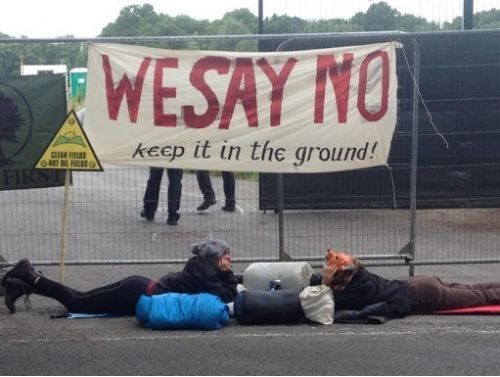
People gathered on the streets, in the squares, held public meetings, distributed literature and went to prison for workers' rights and for reform that represented the people, and for change since the very first cotton mill was built. People dissented in the making of the English working class. I think of those people who said 'No'. I think of the people on current anti-fracking campaigns that can't even access the land and yet know that it belongs to them and that harm is coming to it.
...I think about actual bees, and the Industrial Revolution's continuous destructive impact on the environment. I think of how the bees are now an endangered species. I think of how, when bees swarmed Manchester city centre, the Council called 'pest' control yet continue to adorn the centre with their symbol and develop housing on our remaining land.
I wonder if we should be really using their image as a badge of honour for the time we were forced from the land to the cities and had to slog for our food. I wonder what the bees would think of that. I wonder how we would live with bees and all those "half starved beasts" and "commons full of shrubs" now if we had managed to stay. I think of the fat greedy gentry of Manchester City Council branding our city with bees and taking home massive pay checks for gentrifying the city and out-pricing the working class people of Manchester; those who did all the fucking legwork.
With love and respect to everyone affected by the attack and honouring the tragedy of the violence that happened in 2017, the depth behind the image feels like some fucked up form of symbolic propaganda if we use an image without acknowledging the real history, attaching its story correctly or without permission.
I guess I am asking when the bee image is shared by the people, that people define the narrative and we remember the history of the people. When we use it as a show of solidarity, we do so in both to the history of the people of Manchester, and the bees.
* Maximum wages were set when the statute of labours was passed in 1351. After the bubonic plague there was a shortage of labourers, and workers were able to set their own price. They passed this act to suppress the labour force and keep wages low. The Minimum Wage act was passed in 1998.
Resources
Radical women notes by Michael Herbert.
Radical Women course at Working Class Movement Library.
www.threeacresandacow.co.uk – Performer's kit and show.
Words by Zoe Naylor





.jpg)


.jpg)


.jpg)
.jpg)
(3).jpeg)
.png)
(1).JPG)
