'Yes, the garden's a mess...Yes, you'd get lost in the long grass...but, hey, we're helping bees here...'
The moral high ground has never been higher for those who really don't like attacking their lawn with a mower and strimmer. As the Friends of the Earth fifth annual Great British Bee Count launches this week, wildlife experts are urging people to leave long grass, weeds and wildflowers in their garden.
"Some call them weeds, but I call them rambunctious joy because surely that is what something that chooses to flower whatever the weather, however many times its head is chopped off, despite being trodden on, is called, to be so triumphant despite others' prejudice" explains The Guardian's gardening guru Alys Fowler.
"And prejudice is just what it is because whilst we were mislabelling them weeds rather than wildflowers they carried on with their vital work, feeding our bees, pollinators, beneficial insects and beetles, whatever the weather, wherever they grow" she adds.
Friends of the Earth campaigner, Emi Murphy, explains: "Habitat loss is one of the biggest threats bees face – so it's the perfect excuse to get a bit lazy in the garden this summer and allow things to grow wild and play your part in protecting these crucial pollinators."
Indeed, a Friends of the Earth survey shows that 57% of people would be prepared to allow weeds and longer grass to grow to help wildlife. The call for wildlife-friendly gardening coincides with the start of Friends of the Earth's Great British Bee Count, which runs until 30th June*, sponsored by Ecotalk, and supported by Buglife.
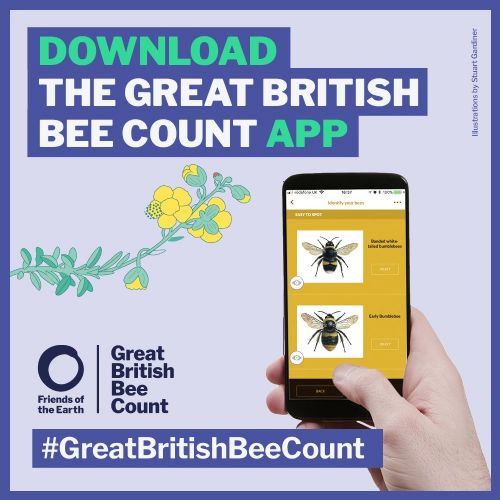
Using a fun, free and easy-to-use app, thousands of verified sightings from this year's Great British Bee Count will be submitted to the Government's new Pollinator Monitoring Scheme (PoMS), which will provide the first comprehensive nationwide health check for Britain's wild bees and other pollinators. The app also contains information on what people can do to help bees including bee spotting and a bee-friendly plant guide.
* To download the Bee app – click here
For more details and bee-friendly gardening tips from Friends of the Earth – click here




.jpg)


.jpg)
.jpg)
(3).jpeg)
.png)
(1).JPG)
