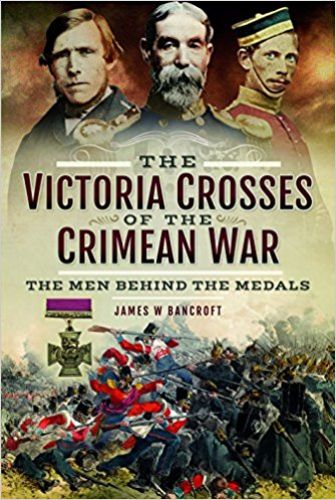
The latest book by Eccles author, James W. Bancroft, is a fascinating account of the Victoria Cross winners from the Crimean War; men from all walks of life, from officers to foot soldiers and sailors.
An incredible 111 Victoria Crosses were awarded to the gallant men who fought in this conflict which raged from October 1853 to February 1856. It could be viewed as the first, 'modern war', with newspaper correspondents reporting from the scene by the new invention of the telegraph, while war photographers were also used with dramatic effect.
Two men who were born in Eccles were awarded the Victoria Cross, John Malone and Cecil Buckley. John Malone was 21 years old, and a sergeant in the 13th Light Dragoons (later 13th Hussars).
On 25th October 1854 at Balaclava, Sergeant Malone, while returning on foot from a charge in which his horse had been shot, stopped under very heavy fire and helped a troop sergeant-major, John Berryman and another sergeant, John Farrell, to move a very severely wounded officer (who subsequently died) out of range of the guns.
On 3 June 1855, Lieutenant Buckley carried out a raid with a boatswain, Henry Cooper, at the town of Taganrog, and were successful in destroying enemy equipment and stores whilst coming under enemy fire.
Queen Victoria introduced the Victoria Cross in January 1856 and the original motto was, 'For The Brave' later changed to 'For Valour'. It is widely believed that all of the VCs awarded were made from captured Russian cannons from this conflict; however experts have cast doubt on this theory, interesting though it is.
This intriguing 256 page book, with loads of illustrations, gives the full details of all the campaigns fought in this war including, Alma, Sebastopol, Inkerman, Great Redan, Svedborg and many more. Each VC winner is given a detailed account of their life and also how they won this most coveted of medals.
I was intrigued to find out such fascinating snippets as: Which Prime Minister's son won the V.C. but never lived to wear it?...Who was the only officer to win and forfeit the medal for his behaviour which included drunkeness, desertion and the charge of, 'Taking indecent liberties with four subordinate officers'?
Also, who was the last surviving winner the VC from the Crimean War campaign, dying in 1920?...Who was the first Welshman to win a VC? And, finally, which VC winner had his medal stolen in a pub fight and was awarded a replacement medal by Queen Victoria?
The descriptions of the fighting are often brutal in their depiction, men being ripped apart from cannon fire, beheaded by sabre slashes and being butchered and stripped of their belongings where they fell.
The ill fated Charge of the Light Brigade is told in minute detail and shows what an act of folly this was, yet has gone down in history as a magnificent 'victory'. The Charge of the Light Brigade by Alfred Lord Tennyson is a famous poem about this which we were taught at school, I recall.
The losses suffered by the British were staggering: 21,097 dead - 2,755 killed in action, 2,019 died of wounds, and 16,323 died of disease.
Bancroft also tells of the fate of many of these brave men once the conflict was over, many ending up in the workhouse and poverty, others suffering from insanity after what they had seen and suffered.
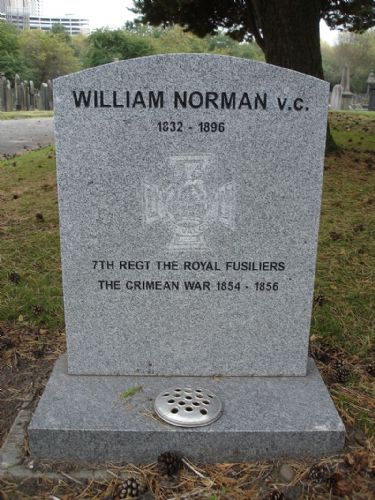
Interestingly enough, one recipient of the Victoria Cross, William Norman, is buried in Weaste Cemetery. He died on the 13th March 1896 and was buried in common ground in an unmarked grave; the reason that no headstone was erected was probably financial.
The Royal Fusiliers employed a local stonemason to make the headstone in 2004, and is a fitting monument to a brave man who fought for his Queen and Country and yet was to end up in a pauper's grave.
James W Bancroft is to be congratulated on such a painstaking and meticulously researched book which is bound to be the definitive book on this campaign.
The Victoria Crosses of The Crimean War:The Men Behind The Medals by James W. Bancroft is out now, published by from Pen & Sword Books Limited £25.
Review by Tony Flynn




.jpg)


.jpg)
.jpg)
(3).jpeg)
.png)
(1).JPG)
