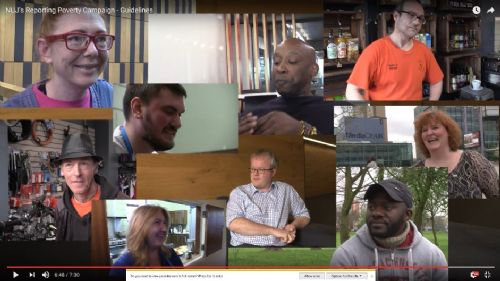
"Poverty is portrayed in the media really, really negatively" says youth and community worker, Daniel, in the opening interview of the NUJ's new film on Reporting Poverty.
"The stories are about people trying to take from the system or sponge off the system and it doesn't really ever talk about the roots and causes of poverty..." he adds.
There follows some real life stories, like that of Letitia, a masters student in Community Development, who was going to pursue a career in the probation service but found herself a single parent on benefits..."That's not what I'm about" she says.
Martin, a community worker, says he's from a well off family who has always worked, except for five or six years; while Alain, an asylum seeker, says he's not allowed to work. Meanwhile Sue, a community worker, explains how she has been "pigeon holed" just for experiencing poverty... 'scroungers'... 'skivers'...and worse.
"It's clear many readers, viewers and listeners think the way poverty is reported needs to be challenged and that journalists need to reconsider what it is they're contributing to" says Rachel Broady, Manchester and Salford National Union of Journalist Equality Officer, who is leading the campaign, which is also supported by Church Action on Poverty.
The film to help challenge misconceptions and stereotypes was made by young people, aged 16 to 24, from The Reporters' Academy in Salford, some of whom have experienced low pay, homelessness and a need to rely on benefits.
"It was important my interview questions were pitched correctly" one the young film maker says "I didn't want the viewer to feel sorry for the interviewee but to understand that this is their life day in, day out."
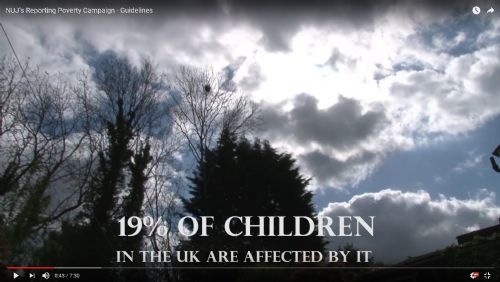
The excellent film, which does give the whole poverty picture in under eight minutes, can be viewed on YouTube – click here
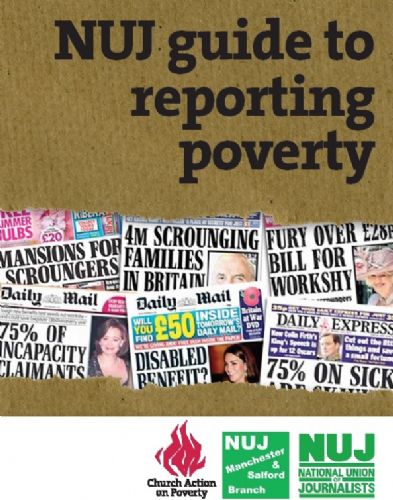
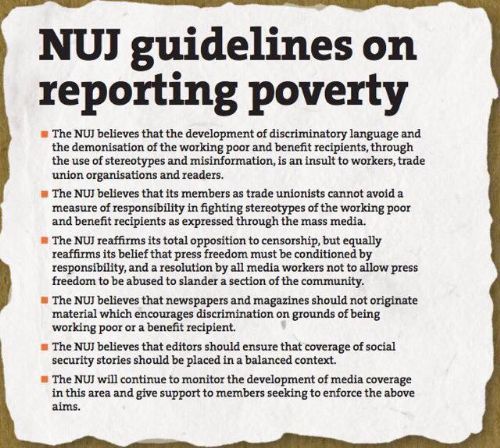
There are also a series of guidelines on reporting poverty that the NUJ has produced... "Poverty is a major issue for society today" says Gavin Aitchison, poverty media co-ordinator at Church Action on Poverty "The great thing about these guidelines is they have at their heart the voices of the people in poverty and that's immensely important for journalists and I think most journalists would welcome that..."
To download the Reporting Poverty guidelines – click here




.jpg)


.jpg)
.jpg)
(3).jpeg)
.png)
(1).JPG)
