A new study supported by the Joseph Rowntree Foundation (JRF) has found that to keep up an adequate standard of living, wages should have risen up to 126% since 2008.
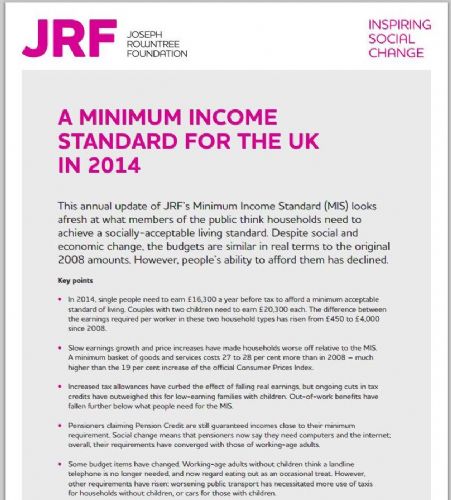
The report, titled A Minimum Income Standard for the UK in 2014 by Abigail Davis, Donald Hirsch, and Matt Padley at the Centre for Research in Social Policy at Loughborough University, asks members of the public what goods and services they think different types of households need to live to an adequate level.
And, published annually since 2008, it uses the information to calculate how much people have to earn – taking into account their family circumstances, the changing cost of these essentials and changes to the tax and benefit system.
This year's research found…
A lone parent with one child now needs to earn more than £27,100, up from £12,000 in 2008 – a rise of 126%
A couple with two children need to earn more than £20,200 each, compared to £13,900 each in 2008 – a rise of 46%
Single working-age people must now earn more than £16,200, up from £13,500 in 2008 – a rise of 21%
"Despite social and economic change, the budgets are similar in real terms to the original 2008 amounts" the study states "However, people's ability to afford them has declined."
The only category of people who get anywhere near keeping up are pensioner couples.
"Overall the cost of a basket of essential items has risen by 28% over six years, while average wages have increased 9% and the minimum wage 14%" it explains "Increased tax allowances have eased the pressure somewhat for some households, but the freeze to child benefit and ongoing cuts in tax credits have outweighed this for low-earning families with children.
"Out-of-work benefits have fallen further and now provide 39% of what single, working-age people need to reach a Minimum Income Standard" it adds "On the other hand, pensioner couples who claim all their allowances receive 95% of the amount required."
The study cites food costs rising by 26% since 2008, domestic energy by 45% and bus travel by 37%
There are differences to the items since 2008. People no longer thought that a landline for a phone was essential but computer access at home was essential. There was also a reduction in the amount allocated for eating out or takeaways by working-age households, who now regard this as an occasional treat.
The study should send shockwaves around Salford because even the official average wage, which is skewed by high earners, is £23,000 – while parts of Salford have `mode' wages (those that occur most often) of less than £13,000.
Read the full study – click here


(13).JPG)


.jpg)


.jpg)
.jpg)
(3).jpeg)
.png)
(1).JPG)
