One of the country's first and now most important and well-known `living' collections of working class history last week celebrated its 25th anniversary since opening its doors to the public in its most recent home in Salford.
The Working Class Movement Library (WCML), based in Jubilee House on The Crescent, is a dedicated collection of the artefacts, memories and experiences of ordinary working people's lives and the struggles they faced for a better life. Tony Benn has called it: "one of the greatest educational institutions in Britain."
Meanwhile, Veronica Trick, a volunteer who has been helping research for the current exhibition on the WCML's anniversary, says the Library is reaching more and more people.
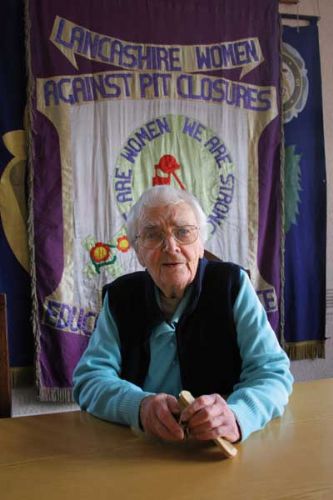
"I love coming here, not only for the amazing things that you can find but its inclusive atmosphere" she explains "Founders Eddie and Ruth Frow didn't want to create a library just for the professional historian or the academic, but for all of us and I think that's a value the Library has continued to uphold.
"Since I've been here I've seen a constant and steady increase in the number of visitors off the street" she adds "It shows that we're managing to bring more people into contact with numerous accounts of working people's histories which have helped form the backbone of British and other societies."
The Working Class Movement Library started its days in the 1950s as the personal findings of trade unionists and campaigners Ruth, who was an activist in the NUT, and Eddie Frow, an eventual district secretary of the Amalgamated Engineers Union (AEU), and a lifelong member of the Communist Party who was one of the leaders of the 1931 Battle of Bexley Square march against unemployment which resulted in his imprisonment in Strangeways for five months.
The pair set about collecting and preserving material on labour movements and workers which, despite being such an incredibly important part of British history, was commonly neglected by many institutions at the time in favour of formal, canonised historical focuses.
Soon finding themselves self-confessed "bibliomaniacs", they would scour the whole length of the country's bookshops looking for accounts on the realities of working peoples' lives and the movements which sprang up out of them, returning when they had run out of money.
At first they lived in tents on the roadside whilst on their trips but later bought a caravan that they packed with so many found books that they were just able to crawl into the space between the beds and the ceiling to sleep. Their decision to look for relevant items - stretching right back from the present to the 1700s, the time of the emergence of modern political consciousness for urban and rural working classes inspired by revolutionary action in France - proved the ambition and incredible scale of their project.
Quickly filling up their flat in Didsbury, they moved to a bigger house, 111 Kings Road in Old Trafford, in 1956. Here the walls rapidly disappeared from sight behind floor-to-ceiling stacks of books and ephemera. By the time 10,000 books were crammed into their house Ruth remembered that "there wasn't even room for a television."
Ruth and Eddie never had any intention of keeping their rapidly growing collection to themselves. The items they brought home weren't simply the symptoms of an understandable want to rediscover, celebrate and preserve sidelined or underappreciated histories but of a belief in making them easily available to all members of the public. This stemmed itself from the radical notion of self-education that had inspired not just themselves but countless labour activists and workers before them.
Ruth herself rather confidently stated her reasoning behind their project, saying: "we know eventually there will be a change in our social system when the country will be governed by those who produce the wealth; for this there will be a widespread need to know what preceded these changes."
In 1969, many years after Ruth and Eddie had begun welcoming interested visitors from both home and abroad into their house, a charitable trust was established to ensure the collection's permanence, continued growth and utility to anyone who wished to come and learn.
By the 1980s the mushrooming and unique resource had attracted the enthusiasm of Salford City Council who used its funds in 1987 to move the Library to a bigger location on Salford Crescent and put it under public control.
A dedicated librarian was hired by the council alongside two assistants and a cleaner who were helped by willing volunteers, annual grants and the increasing donations from individuals and in particular trade unions, who continue to provide a vital source of funding to the Library. It was officially opened on November 6th 1987 by MP Frank Allaun.
Today the Library holds over 31,000 books and 100,000 pamphlets which cover an incredibly varied range of radical political and economic history. This includes, amongst much else, an emphasis on political movements in Britain, bodies such as the Independent Labour Party and the Communist Party of Great Britain and the works of pre-eminent and progressive thinkers such as Thomas Paine and William Morris. It is also considered to be the most significant collection of modern Irish history in Britain, and has numerous, personal accounts written by those involved in events such as the Kinder Scout Trespass, the International Brigades and the Miners' Strike.
Even though it played such a vital role to the public it was not safeguarded from the spending cuts of 1994 which resulted in the reduction in paid staff to only two people. A further blow was dealt to the Library in 2003 when Salford Council announced plans to reduce funding by £10,000 annually for the next five years. However it substantially reduced the lease rent for the next three decades.
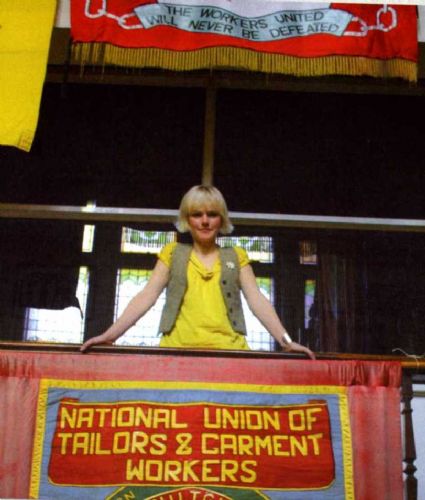
Yet despite these financial worries, which were compounded by the latest announcement of 30% more cuts over the next three years and the sad deaths of Eddie in 1997 and Ruth in 2008, the Library has persevered thanks to the support of its volunteers, trade union funding and personal donations from the Friends of the WCML and the growing board of trustees, who include the Bolton-born, Shameless and Silk actress Maxine Peake amongst their number.
Awards from the Heritage Lottery funding project have helped visits to the centre increase five-fold in the last three years. There are now regular tours of the collections and the creation of community-based projects, the latest being the Invisible Histories Salford's Working Lives oral history project which will focus on capturing the essence of the experiences of Salford residents who worked at the city's largest employers.
The Lottery Fund also helped the WCML to create an online catalogue accessible to everyone through the website, to hire more staff and refurbish the Library so that it could hold regular exhibitions as well as hold regular talks designed to attract a wide variety of visitors. And peole have come from as far away as Japan, as well as from the local community.
The Library's reputation as one of the best collections in Britain of its kind has helped ensure a continued flow of material from individuals and organisations and it always welcomes new additions. It is spreading the word about its drive to obtain recent literature, banners, placards and other items relating to recent movements.
WCML 25 Years Exhibition
Working Class Movement Library
51 The Crescent M5 4WX
Drop in every Wednesday to Friday from 1-5pm or make an appointment 0161 736 3601
More details of library visiting hours and access to the online catalogue can be found on the website www.wcml.org.uk
Whilst the library receives donations it needs to raise £80,000 to ensure that it can remain open to the public. Donations can be made via the website www.wcml.org.uk/appeal
Words by Chloe Glover
Photos by Steven Speed
Main photo shows Ruth Frow posing for a Salford Star feature


.jpg)


.jpg)


.jpg)
.jpg)
(3).jpeg)
.png)
(1).JPG)
