A new report from Salford City Council, including research from the University of Salford, shows that the city has been one of the hardest hit in Greater Manchester during the coronavirus crisis.
The report states the obvious in that "The main impacts have been increased unemployment, less hours worked, less pay and spend in the local economy. This is likely to have exacerbated levels of deprivation and poverty..."
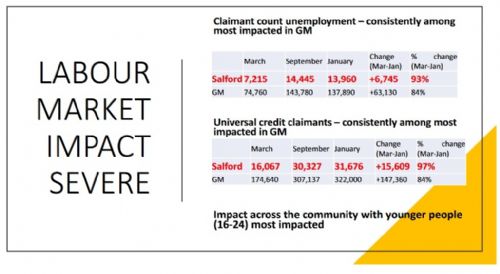
The statistics cited show the level of the impact - claimant count unemployment up 93%, an extra 7,000 people, between March 2020 and January 2021; and credit claimant levels up by 97%, or 15,500 people.
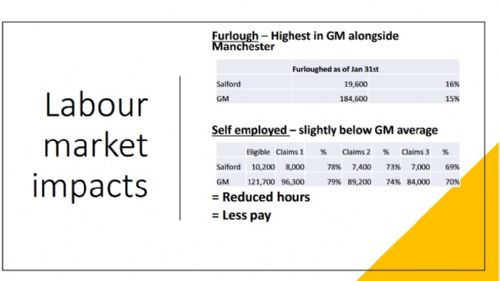
As of January 31st, there were still 19,600 Salford residents on furlough, the joint highest in Greater Manchester, while 7,000 to 8,000 residents have claimed self-employment financial support since March 2020 (see graphic).
"The evidence to date is that young people (16-24) have been impacted most, although impact has been across communities" states the report.
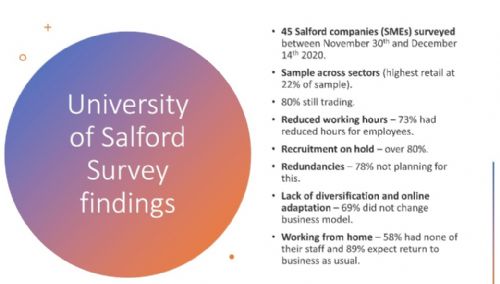
Salford University surveyed 45 SME companies (Small to Medium Enterprises) between 30th November and 14th December and found that 80% were still trading, 73% had reduced hours for employees, 80% had put recruitment on hold, 22% were planning for redundancies and 42% had staff working from home.
The 'non essential' economy has been impacted most – hospitality, culture, retail and personal services, while the least impacted have been companies in the 'essential' economy – supermarkets, construction, manufacturing, logistics and tech.
The Council report concludes that "Salford's long term underlying credentials strong and would expect return to a growth trajectory this year..."




.jpg)


.jpg)
.jpg)
(3).jpeg)
.png)
(1).JPG)
